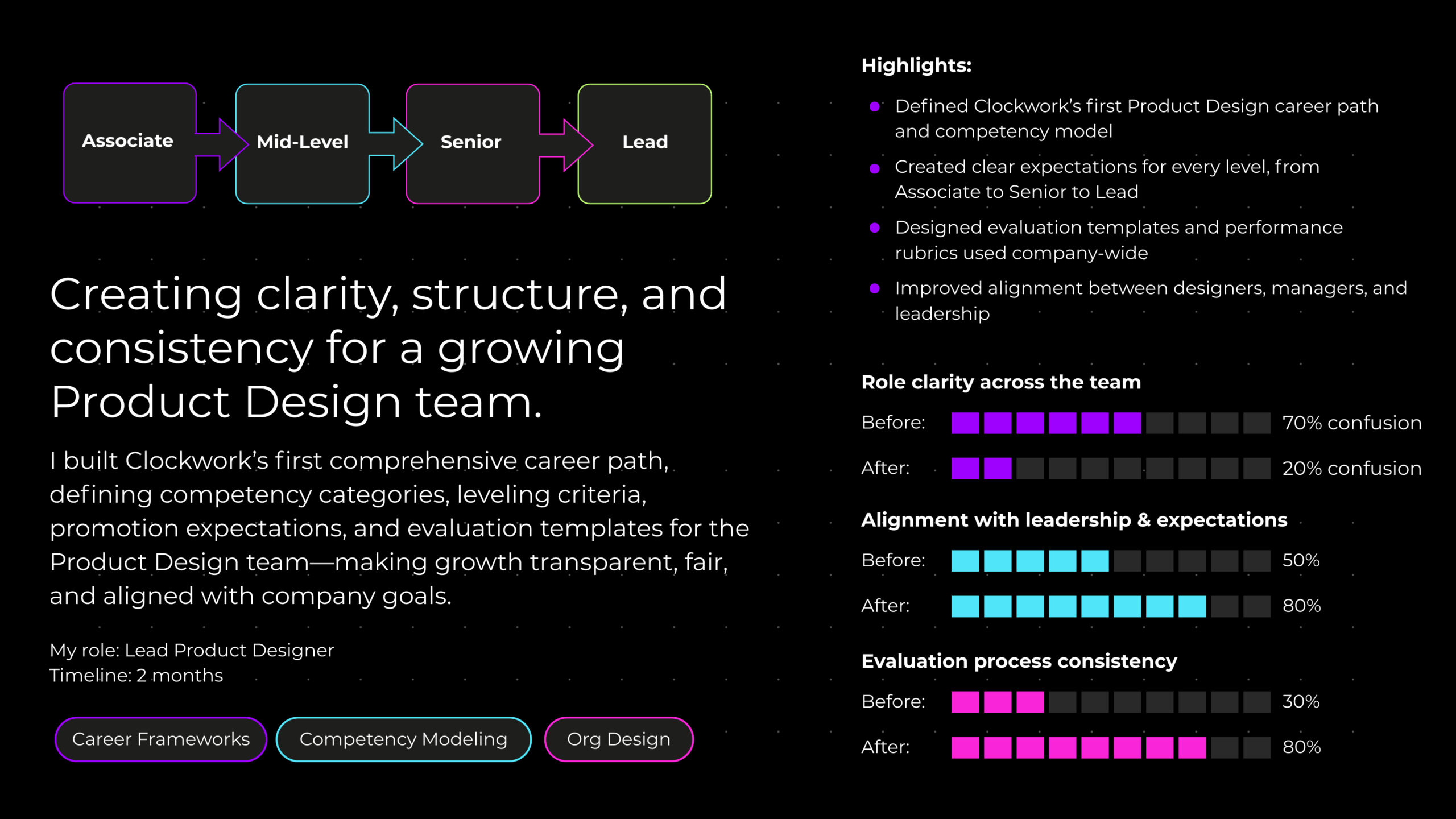
PROJECT SNAPSHOT
FULL CASE STUDY
Overview
As Clockwork evolved and the design team expanded, it became clear that the organization lacked a foundational structure to support designer growth, performance evaluation, and alignment in hiring. Designers often asked:
Without a shared framework, expectations were inconsistent across managers, performance reviews lacked structure, and career progression felt subjective.
To solve this, I led the creation of the Clockwork Product Design Career Path and the Performance Evaluation System, defining:
This work became the backbone of how the design team grew, developed skills, and aligned with the broader Product organization.
The problem
Lack of clarity in expectations
Designers didn’t have visibility into what skills they needed to advance or how they were being measured.
Inconsistent evaluations
Managers evaluated designers using personal criteria, leading to misalignment, confusion, and frustration.
Undefined seniority levels
Titles existed, but the distinctions between Associate, Mid, Senior, and Lead were unclear and not tied to real competencies.
No structure for growth
The team needed a model that showed:
Why this work mattered
A design team cannot scale, or retain talent, without:
This initiative brought structure, fairness, and transparency to roles that previously relied too heavily on intuition. It also professionalized the design function inside Clockwork.
My role
I led this initiative end to end:
Framework Design
Evaluation System
Cross-Functional Alignment
Documentation & Implementation
The design challenge
Creating a design career path isn’t only about defining skills.
It must:
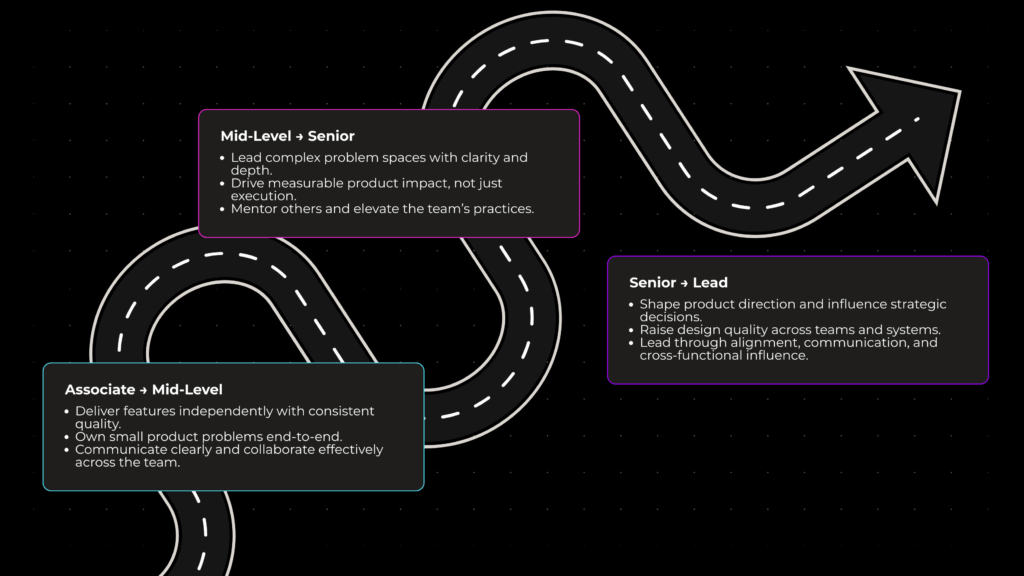
The framework: Product Designer job levels at Clockwork
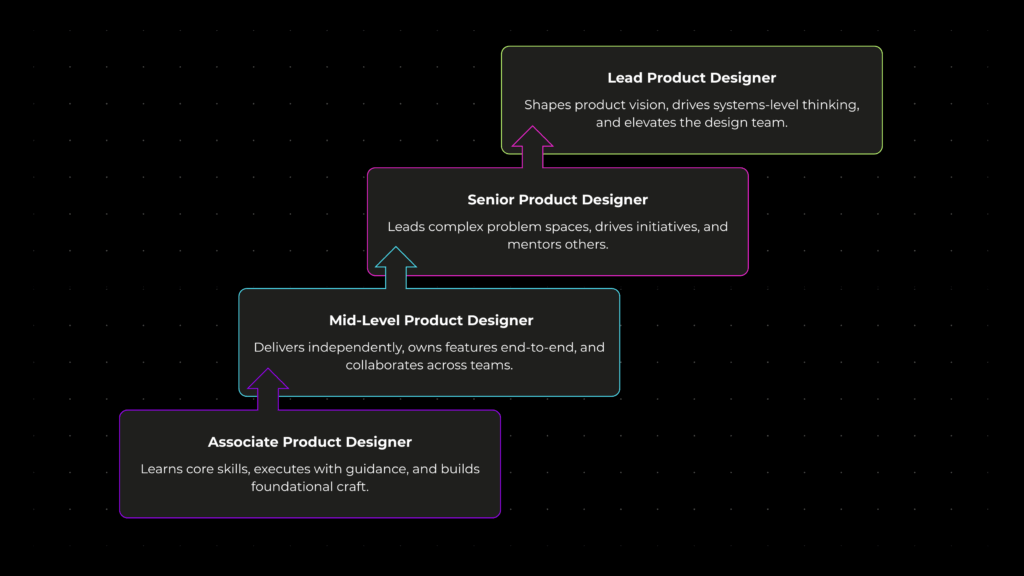
The structure included four core levels:
1) Associate Product Designer
Foundational execution, limited autonomy, high mentorship required.
2) Mid-Level Product Designer
Independent execution, handles features end-to-end, collaborates across teams.
3) Senior Product Designer
Owns large problem spaces, leads initiatives, mentors others, influences strategy.
4) Lead Product Designer
Shapes product direction, drives systems-level thinking, elevates the team, cross-functional leadership.
Competency categories
Each level was defined by these pillars:
These categories formed the basis for growth and evaluation.
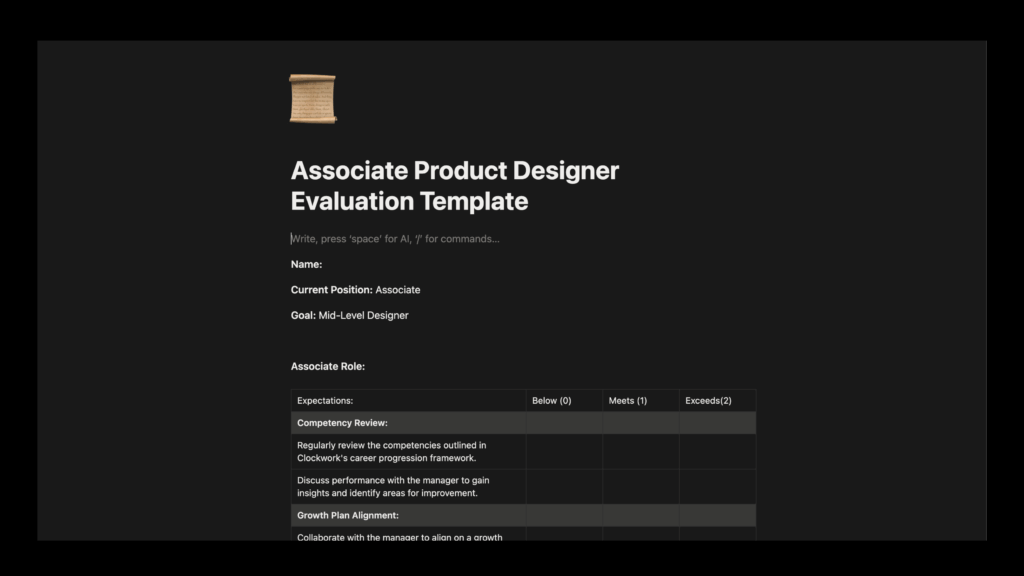
The evaluation templates
I designed structured evaluation templates that included:
Competency grids
For example, Mid-Level evaluation included categories such as:
Behavior expectations at each level
Performance indicators
Both qualitative and quantitative.
A clear scoring model
Which standardized reviews across managers.
These templates became the central tool for:
How it all connected
The Career Path defined what great looked like. The evaluations defined how we measure it. Together, they created a full system for:
It professionalized the design function and created a healthy team culture.
Impact
Clarity & transparency
Designers finally understood expectations, growth paths, and how promotions worked.
Fair & consistent evaluation
Managers used the same rubric and language, reducing bias and misalignment.
Stronger hiring
Clear levels meant better job descriptions and interviews.
Improved retention
Designers felt supported and saw a future for themselves.
Cultural shift
The design team adopted a language of:
Product & engineering alignment
Shared definitions created smoother collaboration and clearer expectations.
Reflection
This project taught me how critical structure is for creative teams. Design cannot scale without:
Creating the Clockwork Product Design Career Framework allowed the team to evolve from a group of individual contributors into a cohesive, empowered, and professionally supported design organization. This work is one of the clearest representations of my strengths as a systems thinker, design leader, and team builder.