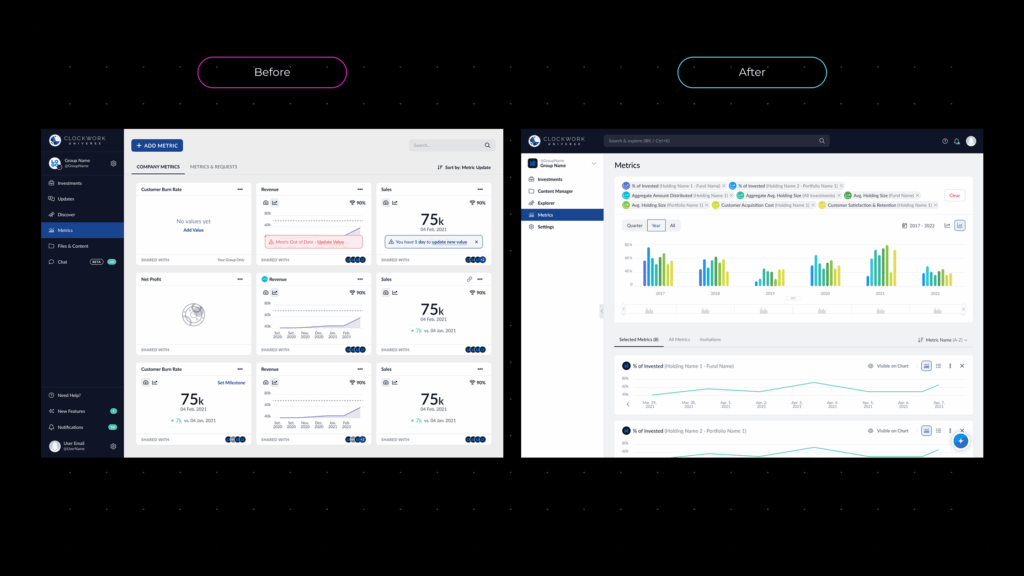
PROJECT SNAPSHOT
FULL CASE STUDY
Overview
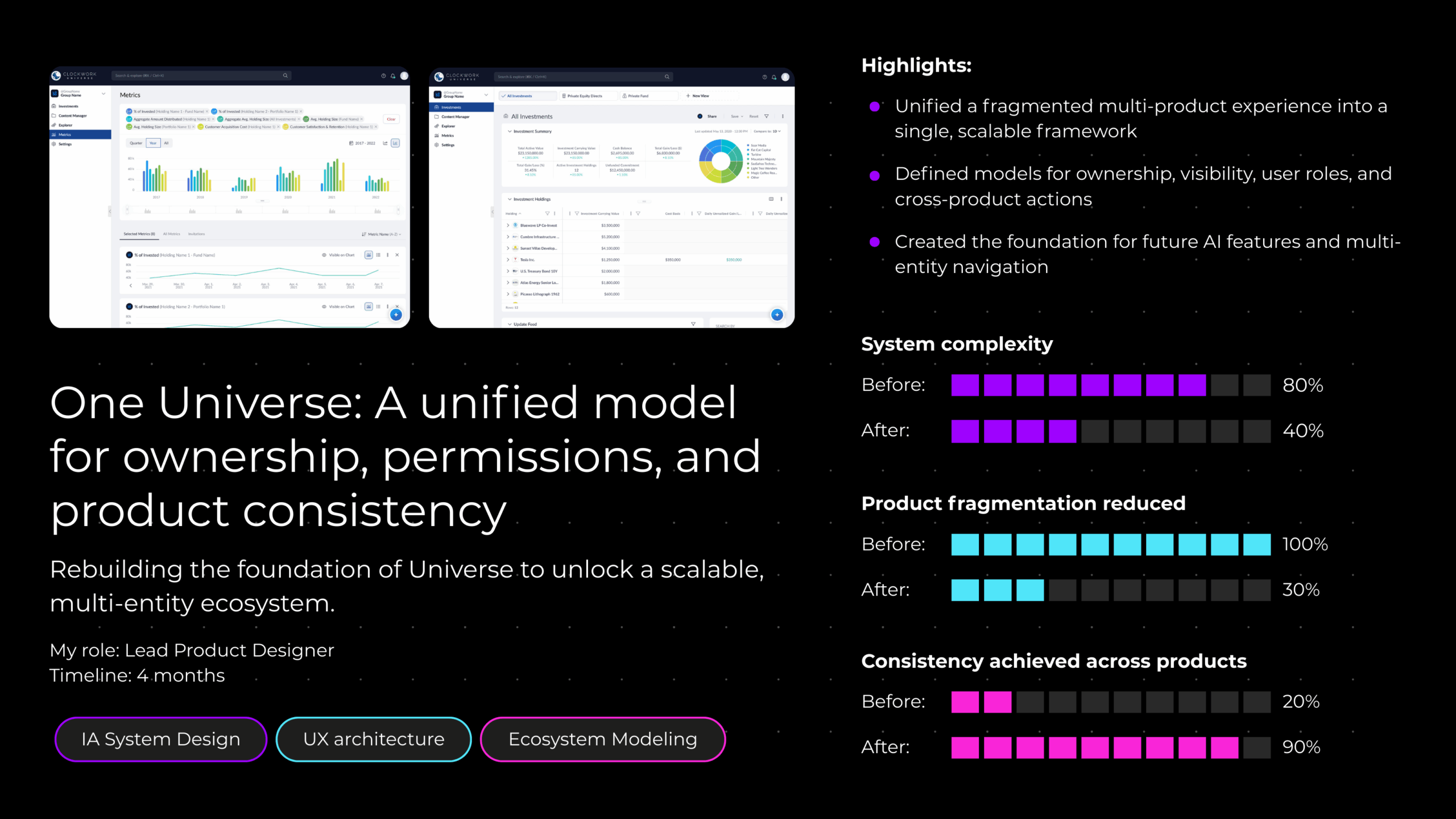
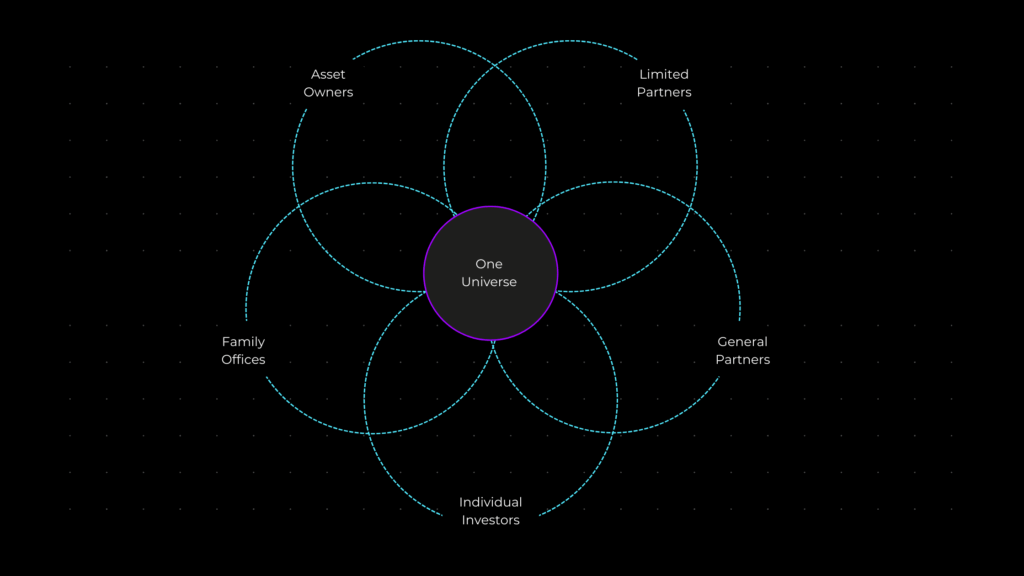
One Universe was a strategic design initiative to transform a fragmented product ecosystem into a unified platform capable of supporting every user type, family offices, asset owners, GPs, LPs, and individual investors, under one coherent structure.
The goal was to build a platform that is simpler, more consistent, and more scalable, establishing a foundation for all future features and product modules.
The problem
Over time, Universe grew organically. Each new feature was designed and developed independently, following different structures, patterns, and UI rules. While the product expanded, coherence decreased.
This led to three major issues:
1. Inconsistent user experience
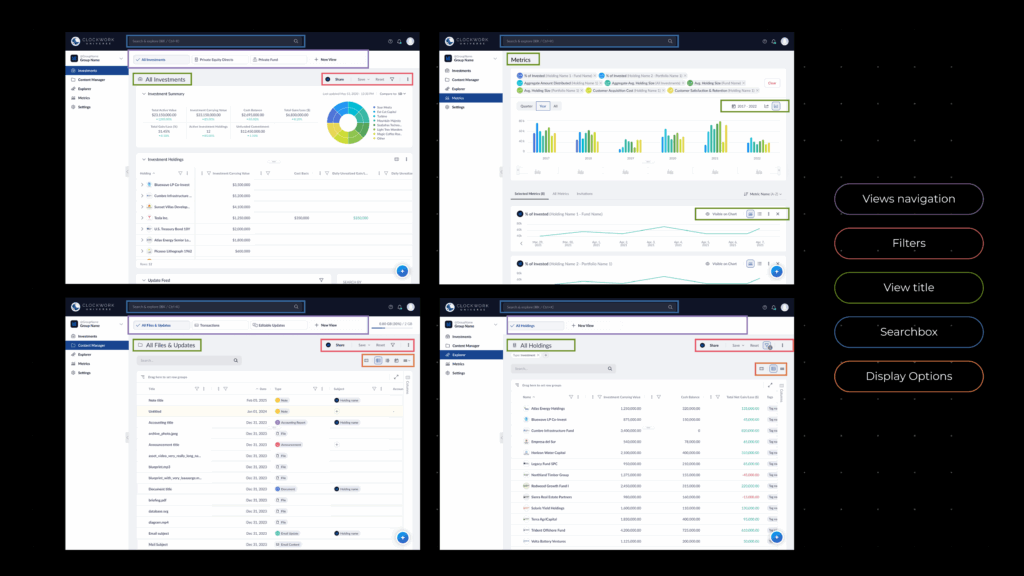
Key components, navigation, search, filters, titles, and display options appeared in every module, but were implemented differently. Users needed to re-learn the product in each section.
2. A product that was hard to scale
Design and engineering had no shared framework. New features required reinventing layouts and logic from scratch.
3. A fragmented experience across user types
Family offices, investors, GPs, and LPs all needed different perspectives and tools, but the product lacked a universal foundation that could accommodate them all. Universe needed a shared language, a unified conceptual and structural framework.
Why One Universe
One Universe emerged as the solution:
The objective wasn’t only aesthetic. It was strategic:
One Universe would become the new architecture of the product.
The design challenge
How do you unify a large, complex, and heterogeneous platform without disrupting the workflows of thousands of daily users?
The challenge required solving three layers simultaneously:
1. Build a foundational design system for the entire platform
Not just UI components, interaction rules, behaviors, structure, hierarchy, and naming.
2. Unify four critical product areas under one model
3. Support all user types without duplicating complexity
Universe needed a “single core” that felt familiar regardless of the user profile.
My role & approach
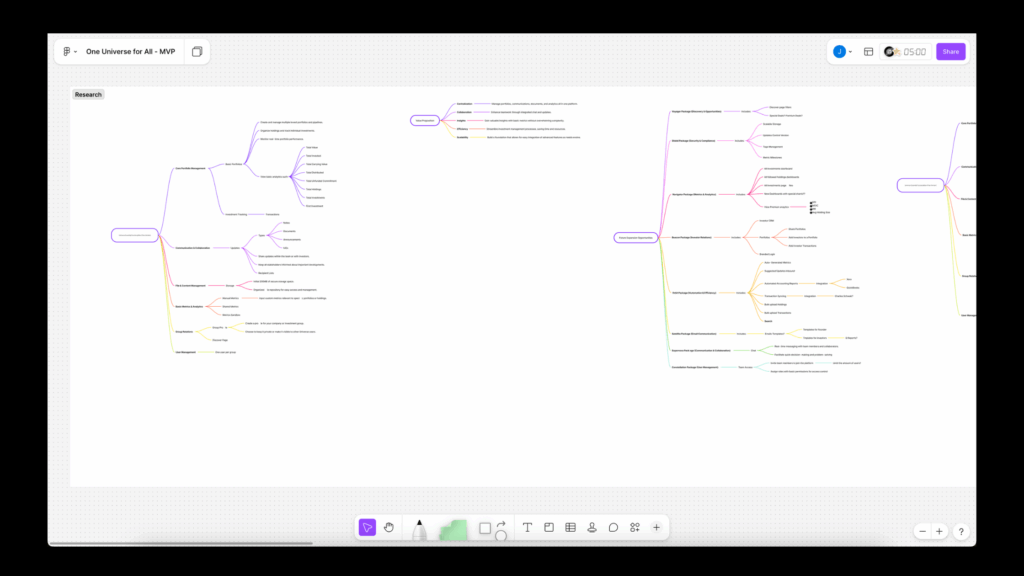
As Lead Product Designer, I was responsible for defining the UX strategy, conducting the product audit, establishing cross-platform patterns, and designing the new structural foundation for Universe.
My approach included:
Strategy: Standardizing to simplify
The project began with a key insight:
Across all modules, the following components were inconsistent:
The UX strategy was to standardize these elements into a universal layout, providing:
The design solution
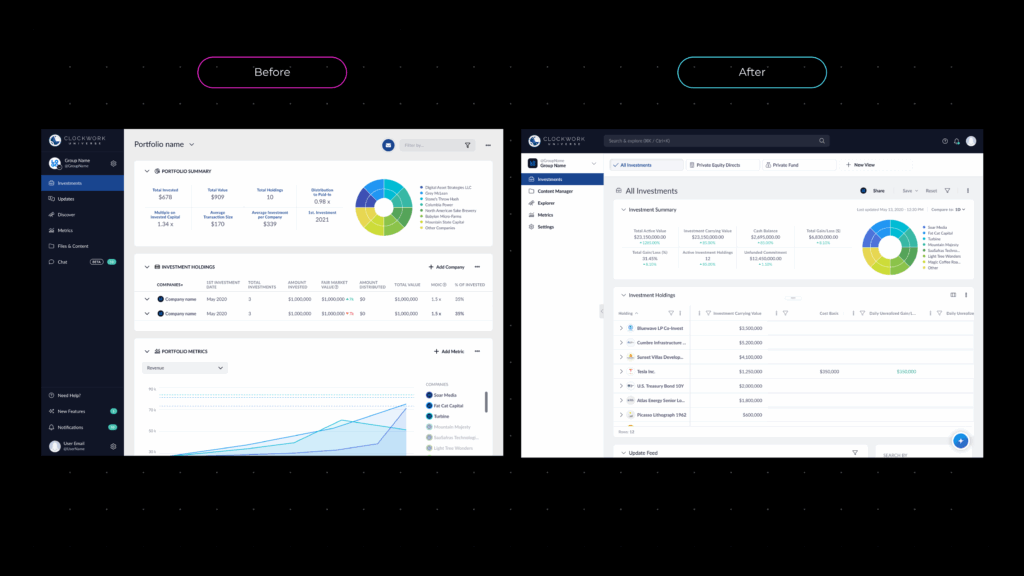
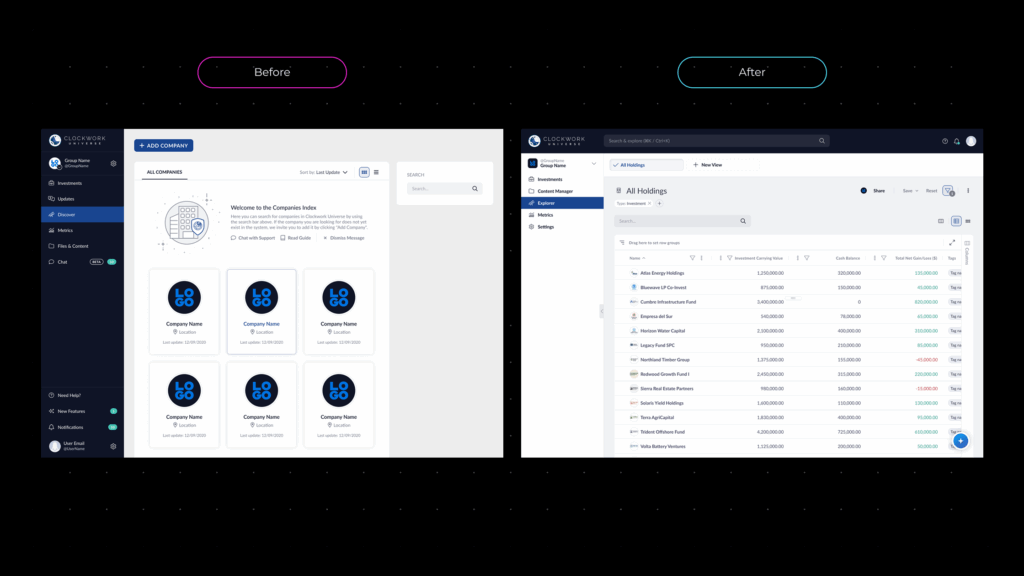
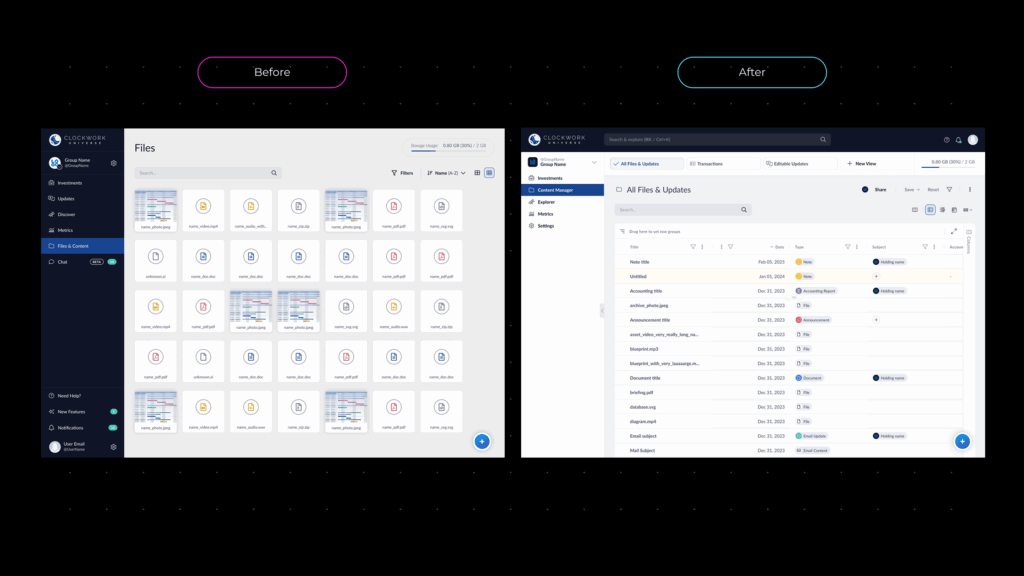
1. A unified platform layout
All major modules now follow a single structural pattern:
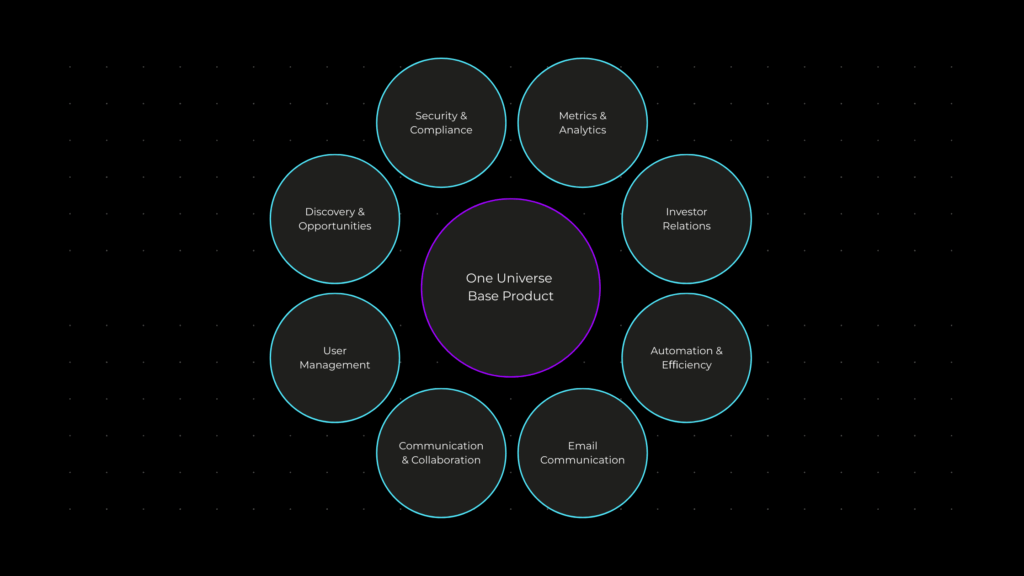
2. Introducing the “One Universe base product”
I designed the conceptual foundation that defines what every user receives:
The Base Product includes core capabilities:
Above this base, additional modules and features can be layered, enabling a modular business model for the first time.
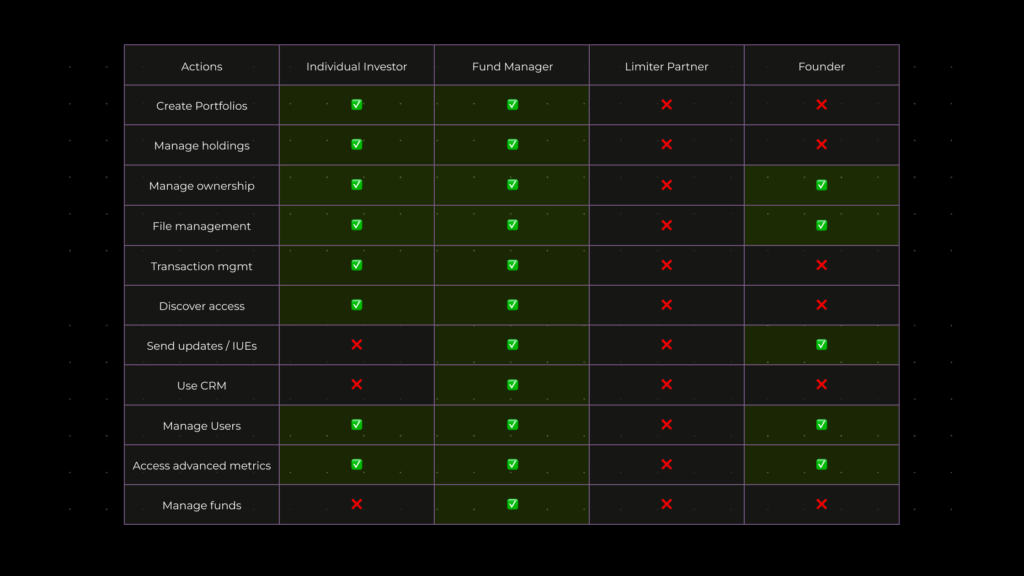
3. Supporting all user types through One Structure
The new foundation was intentionally flexible enough to serve:
The system adapts through permissions, configurations, and group relationships, without duplicating designs or workflows.
Impact
A cohesive experience across the entire product
Users now navigate using consistent patterns, improving learnability and reducing frustration.
Faster and more scalable product development